


ANGELS OF EPILEPSY — EDUCATION CENTER
Your Trusted Hub for Epilepsy Information, Safety Guidance & Family Support
Types of Seizures
Three Major Seizure Categories
Seizures are the main characteristic of epilepsy and are caused by abnormal electrical activity in the brain. They can manifest in various ways, depending on the type of seizure and the area of the brain affected. During a seizure, individuals may experience changes in their behavior, consciousness, movement, sensations, or emotions. These changes can range from subtle and barely noticeable to intense and dramatic.
Seizures can be classified into two main categories: focal seizures and generalized seizures. Focal seizures, also known as partial seizures, occur when abnormal electrical activity is limited to a specific area of the brain. Depending on the part of the brain affected, focal seizures can cause symptoms such as muscle twitching, numbness or tingling, changes in vision, altered senses, or uncontrolled movements. Focal seizures can be further classified as focal aware seizures, where the person remains conscious during the seizure, or focal impaired awareness seizures, where there is a loss of consciousness or altered awareness.
On the other hand, generalized seizures involve abnormal electrical activity that spreads throughout both sides of the brain from the beginning. These seizures often result in loss of consciousness and can cause convulsions, muscle stiffness, jerking movements, staring spells, or brief periods of unconsciousness. Generalized seizures can be categorized into different types, including tonic-clonic seizures (formerly known as grand mal seizures), absence seizures, atonic seizures, myoclonic seizures, and tonic seizures.
Seizures can vary in frequency, duration, and intensity. They can last from a few seconds to several minutes and may occur as isolated events or in clusters. After a seizure, individuals may experience a period of confusion, fatigue, or other physical or cognitive changes. Proper diagnosis and understanding of the different types of seizures are essential for effective treatment and management of epilepsy.
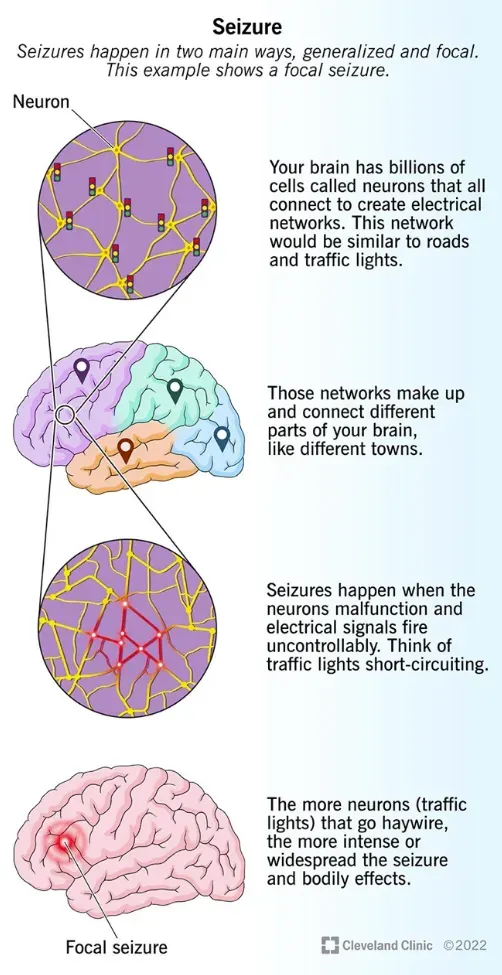
1. Focal Seizures (Partial Seizures)
Start in one part of the brain. Symptoms may include:
Staring
Confusion
Repetitive movements
Changes in taste, smell, or sensations
2. Generalized Seizures
Affect both sides of the brain from the beginning. Types include:
Tonic-clonic
Absence
Atonic (“drop attacks”)
Myoclonic
Tonic
Clonic
3. Unknown Onset Seizures
Used when the beginning of the seizure wasn’t witnessed.
How Long Do Seizures Last?
Most seizures last 30 seconds to 2 minutes.
A seizure longer than 5 minutes is an emergency.
When to Treat a Seizure as an Emergency
Breathing does not return to normal
Injury occurs
Seizure happens in water
Person is pregnant
It’s their first seizure
Seizures vs Epilepsy
The term "seizure" refers to a sudden, abnormal surge of electrical activity in the brain that leads to various symptoms and behaviors. Seizures can be caused by different factors, such as brain injury, infection, genetic conditions, or other medical conditions. They can also occur in individuals who do not have epilepsy.
On the other hand, "epilepsy" is a neurological disorder characterized by recurrent and unprovoked seizures. In order to be diagnosed with epilepsy, a person must experience at least two unprovoked seizures that occur more than 24 hours apart or have a high likelihood of having additional seizures.
Epilepsy is a chronic condition that can affect people of all ages and can have various causes, including genetic factors, brain injuries, developmental disorders, or unknown origins. In summary, a seizure is an event characterized by abnormal electrical activity in the brain, while epilepsy is a neurological disorder characterized by the presence of recurrent and unprovoked seizures.

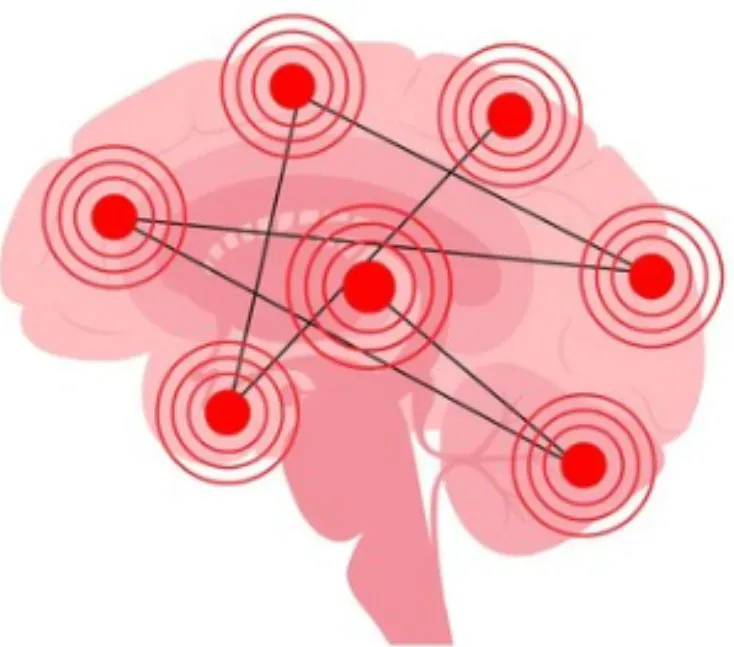
Generalized Seizures
Impaired awareness is common during this seizure type.
Absence seizures:
● Rapid blinking, short period of blanking out
● Typical: staring off into space and eyelids may flutter (<10 seconds)
● Atypical: slower onset and offset with more symptoms (20 or more seconds)
Tonic seizures:
● sudden stiffness in the limbs or body
● cry out, lose consciousness, fall to the ground, muscle jerks or spasms
Atonic seizures:
● muscles suddenly become limp (e.g. drop attacks)
Clonic seizures:
● rhythmical jerking movements of limbs and sometimes both sides of the body
Myoclonic seizures:
● brief muscle twitching
Tonic-clonic seizures:
● stiffening of muscles and rhythmical jerking
Epileptic spasms:
● repeated extension of the body

Focal Seizures
Aware and impaired awareness can occur during this seizure type.
● Changes in emotions and thoughts● Intense emotions, strange feelings
● Racing heart, goosebumps, head or cold waves● Behavior arrest: no movement occurs
● Change in consciousness, which can produce a dreamlike experience; strange, repetitious behaviors such as blinks, twitches, mouth movements, and clapping (also known as automatisms)
● Simple Partial Focal Seizures affect a small part of the brain. Twitching or change in sensation, such as a strange taste or smell
● Complex Partial Focal Seizures can make a person with epilepsy confused or dazed. Unable to respond to questions or directions for up to a few minutes
● Secondary Generalized Seizures begin in one part of the brain but then spreads to both sides of the brain. The person begins with a focal seizure which can turn into a generalized seizure.
Seizure Triggers
● Sleep deprivation
● Illness
● Flashing lights
● Stress Alcohol and drug use
● Menstrual Cycle, or other hormones changes
● Dehydration, starvation, vitamin deficiencies
● Excess caffeine
● Missed Medication - this is the most dangerous trigger for people with seizure
ANGELS OF EPILEPSY
A 501(c)(3) Non-Profit Charitable Organization & Advocacy
All Rights Reserved